
In this guide on data science outsourcing, learn how to select the right partner, and manage projects effectively.
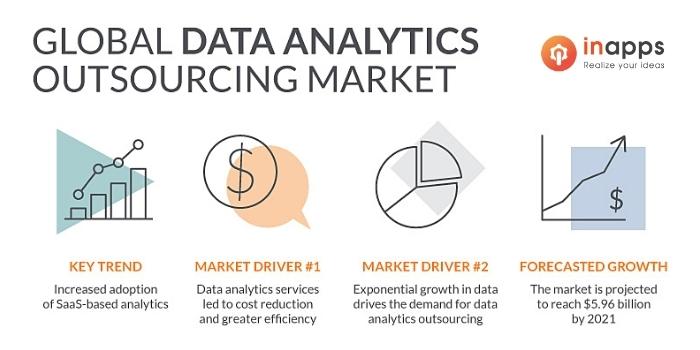
A study by Accenture found that 83% of executives believe that adopting a data-driven culture is essential for success. However, building this culture often requires access to data science expertise, which outsourcing can provide. By turning to outsourcing, companies can bridge this gap effectively. Outsourcing firms have a pool of skilled data scientists, allowing businesses to overcome talent shortages and access specialized skills not readily available in-house.
In this post, we’ll walk you through how data science outsourcing works, and how to pick the best data science outsourcing partner. We’ve got some great tips to help you manage outsourced data science projects. By the end of this article, you’ll know what makes a good outsourcing partner and how to work with them smoothly.
Key Summary
- Why Outsource Data Science?: Access to Expertise: Tap into specialized skills in AI, ML, statistics, and big data without building in-house teams. Cost Efficiency: Lower labor costs in regions like Vietnam, India, or Eastern Europe compared to North America or Western Europe. Scalability: Quickly scale teams based on project needs without long-term commitments. Focus on Core Business: Allows companies to prioritize strategic goals while outsourcing technical data tasks. Faster Time-to-Market: Accelerated development and deployment of data-driven solutions.
- Access to Expertise: Tap into specialized skills in AI, ML, statistics, and big data without building in-house teams.
- Cost Efficiency: Lower labor costs in regions like Vietnam, India, or Eastern Europe compared to North America or Western Europe.
- Scalability: Quickly scale teams based on project needs without long-term commitments.
- Focus on Core Business: Allows companies to prioritize strategic goals while outsourcing technical data tasks.
- Faster Time-to-Market: Accelerated development and deployment of data-driven solutions.
- Key Services Offered: Data Analysis and Visualization: Transforming raw data into actionable insights using tools like Tableau, Power BI. Machine Learning and AI: Building predictive models, NLP, and computer vision solutions. Data Engineering: Data pipeline creation, ETL processes, and database management. Big Data Solutions: Handling large-scale data with Hadoop, Spark, or cloud platforms (AWS, Azure). Consulting and Strategy: Developing data-driven business strategies and roadmaps.
- Data Analysis and Visualization: Transforming raw data into actionable insights using tools like Tableau, Power BI.
- Machine Learning and AI: Building predictive models, NLP, and computer vision solutions.
- Data Engineering: Data pipeline creation, ETL processes, and database management.
- Big Data Solutions: Handling large-scale data with Hadoop, Spark, or cloud platforms (AWS, Azure).
- Consulting and Strategy: Developing data-driven business strategies and roadmaps.
- Benefits: Cost Savings: Up to 40-60% reduction in costs compared to in-house teams. Global Talent Pool: Access to skilled data scientists, engineers, and analysts worldwide. Flexibility: Adjust team size and expertise based on project demands. Advanced Tools: Providers use cutting-edge technologies and frameworks (e.g., TensorFlow, PyTorch). Quality Assurance: Adherence to international standards and rigorous testing.
- Cost Savings: Up to 40-60% reduction in costs compared to in-house teams.
- Global Talent Pool: Access to skilled data scientists, engineers, and analysts worldwide.
- Flexibility: Adjust team size and expertise based on project demands.
- Advanced Tools: Providers use cutting-edge technologies and frameworks (e.g., TensorFlow, PyTorch).
- Quality Assurance: Adherence to international standards and rigorous testing.
- Challenges: Data Security: Risks of data breaches or non-compliance with regulations (e.g., GDPR, HIPAA). Communication Barriers: Time zone differences and language issues may hinder collaboration. Quality Control: Ensuring consistent deliverables requires clear expectations and oversight. Dependency: Over-reliance on vendors can limit in-house capability development.
- Data Security: Risks of data breaches or non-compliance with regulations (e.g., GDPR, HIPAA).
- Communication Barriers: Time zone differences and language issues may hinder collaboration.
- Quality Control: Ensuring consistent deliverables requires clear expectations and oversight.
- Dependency: Over-reliance on vendors can limit in-house capability development.
- Best Practices for Outsourcing: Choose Reputable Vendors: Select providers with proven track records, certifications, and client reviews. Define Clear Objectives: Set specific goals, KPIs, and deliverables in contracts. Ensure Data Security: Implement NDAs, encryption, and compliance with data protection laws. Foster Communication: Use tools like Slack, Jira, or Zoom for transparent, real-time collaboration. Start Small: Begin with pilot projects to evaluate vendor performance before scaling.
- Choose Reputable Vendors: Select providers with proven track records, certifications, and client reviews.
- Define Clear Objectives: Set specific goals, KPIs, and deliverables in contracts.
- Ensure Data Security: Implement NDAs, encryption, and compliance with data protection laws.
- Foster Communication: Use tools like Slack, Jira, or Zoom for transparent, real-time collaboration.
- Start Small: Begin with pilot projects to evaluate vendor performance before scaling.
- Why Vietnam for Data Science Outsourcing?: Skilled Workforce: Over 400,000 IT professionals, with strong expertise in AI, ML, and data science. Cost Advantage: Competitive rates (20-40% lower than India or Eastern Europe). English Proficiency: Effective communication with global clients. Government Support: Policies promoting tech innovation and education. Growing Ecosystem: Thriving tech hubs in Ho Chi Minh City, Hanoi, and Danang.
- Skilled Workforce: Over 400,000 IT professionals, with strong expertise in AI, ML, and data science.
- Cost Advantage: Competitive rates (20-40% lower than India or Eastern Europe).
- English Proficiency: Effective communication with global clients.
- Government Support: Policies promoting tech innovation and education.
- Growing Ecosystem: Thriving tech hubs in Ho Chi Minh City, Hanoi, and Danang.
1. What Is Data Science Outsourcing?
Data scientists, typically computer scientists or statisticians, play a crucial role in any organization that utilizes data analytics. They develop innovative solutions to company problems through various statistical analysis techniques
Data science outsourcing is a form of software development outsourcing, involving hiring an IT outsourcing company to handle all or part of your data science initiatives. This service can encompass data collection, cleaning, modeling, and interpretation, with data scientists from the outsourcing firm taking full responsibility for these tasks.
However, hiring data experts can be costly, so many companies choose to hire offshore data scientists instead. Outsourcing data science tasks to offshore data scientists provides access to specialized skills without the need to conduct in-house training but is also becoming increasingly popular in fields like big data. If you’re not convinced yet, consider the following benefits of outsourcing data science services.
2. How Does Data Science Outsourcing Work?
Data science outsourcing is a structured approach that companies use to delegate data-related tasks to offshore data scientists. This process allows businesses to use advanced expertise without the overhead of hiring a full-time data science team. Here’s a thorough explanation of how data science outsourcing works, broken down into clear, manageable steps:
Step 1: Identifying Needs and Setting Objectives
Firstly, data science outsourcing involves a clear identification of the business needs and objectives. Companies must determine what they aim to achieve through data science. This could involve enhancing product recommendations, optimizing operations, forecasting trends, or other specific goals that require data analysis. Defining these goals helps in outlining the scope of work and the specific data science skills required of your offshore data scientists. This ensures that the outsourcing partner can align the team of data scientists with your company’s strategic objectives.
Step 2: Choosing the Right Outsourcing Partner
Once the goals and scope are defined, the next step is selecting an outsourcing partner who can provide data science outsourcing services. This involves researching and assessing various data science development services providers to determine their expertise, experience, and track record in similar projects.
Most data science development services providers have a LinkedIn account. So this is a valuable resource, allowing you to search for companies and professionals. Google is another essential tool. Search for keywords like “data science development services” or “hire offshore data scientists.” and you’ll see a long list of data science outsourcing companies to help you.
Make sure you look for partners who not only have the technical capability but also understand their industry’s specific challenges and regulations. Criteria for selection often include technological proficiency, data security standards, project management practices, and the ability to scale operations as needed.
Step 3: Project Kickoff and Team Integration
Before the project starts, you’ll exchange a few emails and hold online meetings with the offshore team to finalize the requirements and budget. During this time, you’ll need to select the right offshore data scientists to join the team. Once everything is set, a kickoff meeting will be held to align everyone on the project details, timelines, and communication process.
In this meeting, the offshore data scientists from your outsourcing partner may integrate with your internal teams to ensure smooth collaboration. Clear communication channels and regular updates will be established to keep all stakeholders informed throughout the project.
Step 4: Data Transfer and Security Measures
Data transfer is a critical component of data science outsourcing. The company must securely share relevant data with the outsourcing partner. This involves setting up secure data transfer protocols and ensuring compliance with data privacy laws and regulations, such as GDPR or HIPAA, depending on the geographical and sector-specific legal requirements. Both parties must agree on how data will be handled, stored, and protected throughout the project to prevent breaches and unauthorized access.
Step 5: Execution of Data Science Tasks
With the data in hand, the outsourcing team begins the actual data science work. Depending on the project scope, this can include data cleaning, data analysis, statistical modeling, machine learning, and data visualization tasks. The outsourcing partner applies various techniques and tools to extract insights and achieve the defined objectives. Throughout this phase, the outsourcing team may present preliminary findings to the client for feedback and adjustment, ensuring the results align with expected outcomes.
Step 6: Review, Refinement, and Delivery
The final phase involves reviewing the results produced by the outsourcing team. This step ensures that the insights and models developed meet the quality standards and are actionable for the client. The offshore data scientists may need to refine or tweak the models based on the feedback. Once finalized, the results are formally delivered to the company, often accompanied by detailed reports, dashboards, or even interactive tools that the company can use.
Step 7: Ongoing Support and Optimization
Data science projects often require ongoing support after the initial delivery. The outsourcing partner may provide maintenance, updates, and continual optimization of the models as new data becomes available or as business needs evolve. This support ensures that the data science solutions continue to provide value and remain effective over time.
By following a structured process, companies can take advantage of external expertise to achieve specific, impactful outcomes. This approach not only helps businesses tackle complex data challenges but also allows them to stay agile and competitive. When implemented effectively, data science outsourcing can lead to a strong competitive advantage.
3. Pros and Cons of Data Science Outsourcing
3.1 Benefits of Data Science Outsourcing
Data science outsourcing offers many benefits for businesses, including:
- Cost savings: Outsourcing data science can be more cost-effective than hiring in-house staff. This is because the service provider already has the necessary skills and resources to get the job done.
- Improved efficiency: When businesses outsource data science, they can benefit from improved efficiency due to the specialist skills and experience of the service provider.
- Access to specialist knowledge: By outsourcing data science, businesses have access to expertise that they cannot find in-house. This can be extremely valuable for complex projects or when tackling challenging problems.
- Scalability: Outsourcing data science can help businesses scale up or down their operations as needed. This is because the service provider can quickly and easily ramp up or reduce their resources according to their requirements.
- Greater focus on core activities: When businesses hire offshore data scientists, they can focus on their core activities and leave the specialist work to the service provider.
- Access to new opportunities: Outsourcing data science can help companies access new markets, customers, and strategic business opportunities by leveraging the service provider’s networks and connections.
- Connections with academia: Many organizations choose to outsource data science services because of the service provider’s connections with academia. This can give businesses access to the latest research and developments in data science, which can help them stay ahead of the competition.
- Faster time to market: Outsourcing data science can help businesses get their products or services to market more quickly. This is because the service provider has the necessary skills and knowledge to complete the required tasks quickly and efficiently.
3.2 5 Risks of Data Science Outsourcing
There are also some risks that businesses need to be aware of when outsourcing data science. These include:
- Lack of control: When businesses outsource data science, they lose some control over the work being done. This can be a problem if the service provider does not meet the expectations of the business.
- Cultural differences: There can be cultural differences when businesses outsource data science services because the offshore data scientists may be in a different location or working in a different culture from their own. This can cause problems if both parties do not effectively understand each other’s needs and requirements.
- Data security concerns: There can be security concerns when businesses outsource data science, as the service provider may have access to sensitive company information. Companies need to ensure that they understand the service provider’s security measures in place.
- Limited control over resources: When businesses outsource data science, they may not have complete control over the resources that are being used. This can be a problem if the service provider is not meeting the expectations of the business or if they need to scale up or down their operations quickly.
- Integration difficulties: When businesses outsource data science, there can be difficulties integrating the work that has been done into their own data storage systems. This can be a problem if the business needs to change its operations and workflow.
4. How to Choose the Right Data Science Outsourcing Partner
Finding the right partner for data science outsourcing directly impacts your project’s success and your company’s data-driven initiatives. Here’s a practical guide on how to secure a partner that aligns perfectly with your specific needs.

4.1 Do your research
Before beginning your search for a data science outsourcing partner, it’s crucial to understand what data science entails and what specific needs your project aims to fulfill. This knowledge will help you articulate your requirements more precisely and ensure you harness the full potential of your outsourcing engagement.
4.2 Find outsourcing companies with the right skillset
Data science is a field that not all software development companies specialize in. It’s important to select a company that not only lets you hire offshore data scientists but has a proven track record in this specific area. Look for companies with robust data science capabilities, and relevant industry experience to handle your project.
4.3 Ask for references and samples of work.
To hire the right offshore team, request references and examples of previous projects similar to yours. Any reputable data science outsourcing provider should be able to showcase their expertise through past successes.
4.4 Ask about processes and support during the project.
Partnering with a company that has dedicated offshore data scientists experienced in managing outsourced data science projects is essential. Inquire about their project management processes and the support structure they provide to ensure smooth execution and timely delivery of your project.
4.5 Define success criteria and KPIs ahead of time
Before finalizing a partnership, clearly define what success looks like for your project. Establish key performance indicators (KPIs) that will help both you and the data science outsourcing company track progress and align on expectations. Whether these criteria are based on project timelines, specific analytical goals, or other benchmarks, having them in place is crucial for measuring the success of the outsourcing arrangement.
5. Best Practices in Managing Outsourced Data Science Projects
Imagine investing a significant portion of your budget into outsourcing, only to face delayed deliveries, subpar work, or even a total project failure. Such scenarios are not just costly but can also damage your company’s competitive edge. In the worst case, improper handling of data could lead to security breaches, legal issues, and a loss of trust from your customers.
In this section, we’ll explore the best practices for managing outsourced data science projects effectively so that you’ll not only mitigate risks but also enhance the value of data science outsourcing.
5.1. Establish Communication Protocols
Effective communication is key to the success of outsourced projects. Set up regular check-ins and updates through emails, video calls, or project management tools. Clear and open lines of communication will help mitigate risks, manage expectations, and ensure that any issues are addressed promptly.
It’s also essential to appoint a project manager to coordinate with the outsourcing data scientist team and streamline the flow of information. This role serves as a central point of contact for all communications, ensuring that both parties remain aligned on project goals and progress. This individual should understand both technical and business aspects to effectively manage the interface between your company and the external team.
5.2. Implement Robust Data Governance
Data security and privacy are paramount in outsourced data science projects. Implement stringent data governance policies to manage how data is accessed, used, and shared between your organization and the outsourcing partner. This includes compliance with all relevant data protection regulations (such as GDPR or HIPAA). Your outsourcing partner should have secure systems to protect your data throughout the project lifecycle.
5.3. Use Detailed Contracts and Clear Metrics
Create detailed contracts that outline all project specifics, including scope, milestones, timelines, payment schedules, and confidentiality clauses. Define clear performance metrics and key performance indicators (KPIs) that will help you measure the success of the data science outsourcing partnership. These metrics should be agreed upon at the beginning of the project and monitored regularly.
5.4. Provide Feedback and Encourage Iteration
Continuous improvement is crucial in data science projects. Regularly review the work delivered by the outsourcing partner and provide constructive feedback. Encourage an iterative approach to project development, where insights and feedback from one stage inform adjustments in the next. This process not only enhances the project outcome but also builds a stronger working relationship.
5.5. Plan for Knowledge Transfer
To ensure sustainability and continuity, plan for a knowledge transfer towards the end of the project. This might involve detailed documentation, training sessions for in-house staff, or even post-project support. Your team must maintain and develop the project outcomes after the outsourcing agreement ends.
By adhering to these best practices, you can manage outsourced data science projects more effectively, leading to better outcomes and a stronger, more productive relationship with your outsourcing partner.
6. Wrapping Up
Partnering with experienced data science outsourcing firms can save you from miscommunication, wasted time, and money. The right partner will align their services with your business goals and ensure they follow local regulations.
InApps helps companies worldwide tackle talent shortages by providing skilled software engineers from Vietnam. These engineers become key members of your product development team, equipped to handle any software project—something our high customer retention rate reflects. Want to hire offshore data scientists? Let us know what skills you need.
Rate this post
Read More:
Update The Essentials of Using an Ephemeral Key Under TLS 1.3
Related Articles
Best Countries to Outsource Software Development (2026 Guide)
Software development outsourcing means hiring an external engineering team - usually based in another country- to design, build, or maintain software on your behalf, instead of hiring in-house. Most US, UK, and Australian companies do this to access skilled engineers faster and at a lower fully-loaded cost than domestic hiring allows.

How to Hire Remote Developers Without Losing Code Quality: A 2026 Playbook for CTOs
Every CTO who hires remote developers eventually asks the same question: how do I know this is going to work before I've sunk three months and a sprint's worth of technical debt into finding out? Most guides to hiring remote developers answer a different question: which platform to use. They skip the part that actually determines whether the code that comes back is any good. This playbook covers the vetting mechanics, engagement models, and real rate data behind hiring remote engineers who ship production-quality code from week one, not another list of freelance marketplaces.
IT Managed Services vs Break-Fix IT Support: What Growing Startups Need in 2026
Break-fix IT feels free right up until the week something breaks in production and there is no one already watching for it. Here is how growing startups actually decide between break-fix support and managed services in 2026, and why the decision has gotten sharper for anyone shipping a product built quickly with AI tools.