InApps Technology
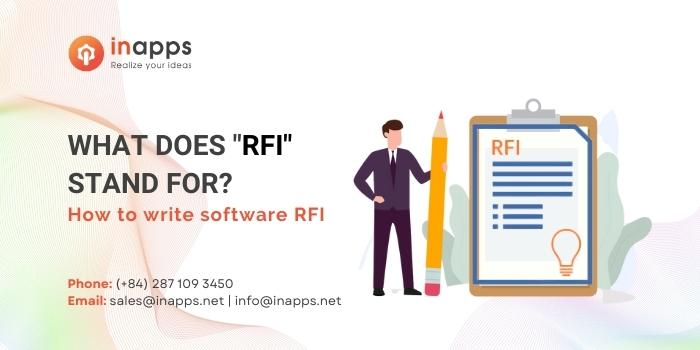
RFI stands for what? How to write software RFI

RFI stands for what? How to write software RFI

Anh HoangMarch 21, 202216 min read

The RFI is the beginning point for your software development project. It is widely used to initiate projects between two partners to give the outsourced

The RFI is the beginning point for your software development project. It is widely used to initiate projects between two partners to give the outsourced service vendor the clients’ requirements and objectives. This article will provide all about RFI: RFI stands for what, the importance of an RFI, RFI template, and how to write an RFI.

The information in this post will teach you how to build an RFI for software development that will elicit prompt and meaningful responses from potential vendors.

rfi-stands-for

RFI stands for 

Key Summary

  • Overview: The article by InApps Technology explains the concept of a Request for Information (RFI) in software development, detailing its purpose, components, and a step-by-step guide to writing an effective RFI to gather information from potential vendors, ensuring informed decision-making for software projects.
  • What is an RFI?: Definition: A Request for Information (RFI) is a formal document used by organizations to collect detailed information from potential vendors about their capabilities, services, and solutions before initiating a software project. Purpose: Gathers preliminary data to evaluate vendors’ expertise, technology, and alignment with project needs. Helps narrow down vendor options before issuing a Request for Proposal (RFP) or Request for Quote (RFQ). Clarifies project requirements and identifies potential challenges or solutions. When to Use: Early in the procurement process, when exploring vendor options for software development, IT services, or technology solutions.
  • Definition: A Request for Information (RFI) is a formal document used by organizations to collect detailed information from potential vendors about their capabilities, services, and solutions before initiating a software project.
  • Purpose: Gathers preliminary data to evaluate vendors’ expertise, technology, and alignment with project needs. Helps narrow down vendor options before issuing a Request for Proposal (RFP) or Request for Quote (RFQ). Clarifies project requirements and identifies potential challenges or solutions.
  • Gathers preliminary data to evaluate vendors’ expertise, technology, and alignment with project needs.
  • Helps narrow down vendor options before issuing a Request for Proposal (RFP) or Request for Quote (RFQ).
  • Clarifies project requirements and identifies potential challenges or solutions.
  • When to Use: Early in the procurement process, when exploring vendor options for software development, IT services, or technology solutions.
  • Key Components of a Software RFI: Introduction: Brief overview of the organization, its goals, and the purpose of the RFI. Example: “ABC Corp seeks information on custom CRM solutions to improve customer engagement.” Project Overview: High-level description of the software project, including objectives, scope, and expected outcomes. Example: “Develop a cloud-based CRM with mobile access and integration with Salesforce.” Vendor Information: Requests details about the vendor’s company size, experience, certifications, and client references. Example: “Provide case studies of similar CRM projects completed in the past 3 years.” Technical Requirements: Specifies desired technologies, platforms, or features (e.g., tech stack, scalability, security). Example: “Support for Node.js backend, MongoDB database, and GDPR compliance.” Questions: Targeted questions to assess vendor capabilities, such as development methodologies, timelines, or support models. Example: “What Agile practices do you use, and how do you handle post-launch maintenance?” Submission Guidelines: Details on response format, deadline, and contact information. Example: “Submit PDF responses by [date] to [email].” Confidentiality Statement: Ensures sensitive project details are protected by vendors.
  • Introduction: Brief overview of the organization, its goals, and the purpose of the RFI. Example: “ABC Corp seeks information on custom CRM solutions to improve customer engagement.”
  • Brief overview of the organization, its goals, and the purpose of the RFI.
  • Example: “ABC Corp seeks information on custom CRM solutions to improve customer engagement.”
  • Project Overview: High-level description of the software project, including objectives, scope, and expected outcomes. Example: “Develop a cloud-based CRM with mobile access and integration with Salesforce.”
  • High-level description of the software project, including objectives, scope, and expected outcomes.
  • Example: “Develop a cloud-based CRM with mobile access and integration with Salesforce.”
  • Vendor Information: Requests details about the vendor’s company size, experience, certifications, and client references. Example: “Provide case studies of similar CRM projects completed in the past 3 years.”
  • Requests details about the vendor’s company size, experience, certifications, and client references.
  • Example: “Provide case studies of similar CRM projects completed in the past 3 years.”
  • Technical Requirements: Specifies desired technologies, platforms, or features (e.g., tech stack, scalability, security). Example: “Support for Node.js backend, MongoDB database, and GDPR compliance.”
  • Specifies desired technologies, platforms, or features (e.g., tech stack, scalability, security).
  • Example: “Support for Node.js backend, MongoDB database, and GDPR compliance.”
  • Questions: Targeted questions to assess vendor capabilities, such as development methodologies, timelines, or support models. Example: “What Agile practices do you use, and how do you handle post-launch maintenance?”
  • Targeted questions to assess vendor capabilities, such as development methodologies, timelines, or support models.
  • Example: “What Agile practices do you use, and how do you handle post-launch maintenance?”
  • Submission Guidelines: Details on response format, deadline, and contact information. Example: “Submit PDF responses by [date] to [email].”
  • Details on response format, deadline, and contact information.
  • Example: “Submit PDF responses by [date] to [email].”
  • Confidentiality Statement: Ensures sensitive project details are protected by vendors.
  • Ensures sensitive project details are protected by vendors.
  • Steps to Write an Effective Software RFI: 1. Define Objectives: Clearly outline project goals, target audience, and desired outcomes to focus vendor responses. Example: “Enhance user retention with a scalable mobile app for e-commerce.” 2. Research Market: Identify potential vendors and review their portfolios to tailor questions to their strengths. Use platforms like Clutch or LinkedIn for vendor discovery. 3. Draft the RFI: Use a clear, structured template with concise language to avoid ambiguity. Include specific questions to elicit detailed, comparable responses (e.g., “Describe your experience with AWS deployments”). 4. Specify Requirements: List must-have features, technical preferences, and compliance needs (e.g., HIPAA, GDPR). Avoid overly detailed specs to keep the RFI exploratory. 5. Set Clear Guidelines: Define submission deadlines (typically 2-4 weeks), response format (e.g., PDF, Word), and evaluation criteria. Provide a single point of contact for clarifications. 6. Review and Distribute: Proofread for clarity and completeness, involving stakeholders for feedback. Send to a curated list of vendors or post on procurement platforms. 7. Evaluate Responses: Compare vendor answers based on expertise, alignment, and innovation potential. Shortlist vendors for follow-up discussions or RFP issuance.
  • 1. Define Objectives: Clearly outline project goals, target audience, and desired outcomes to focus vendor responses. Example: “Enhance user retention with a scalable mobile app for e-commerce.”
  • Clearly outline project goals, target audience, and desired outcomes to focus vendor responses.
  • Example: “Enhance user retention with a scalable mobile app for e-commerce.”
  • 2. Research Market: Identify potential vendors and review their portfolios to tailor questions to their strengths. Use platforms like Clutch or LinkedIn for vendor discovery.
  • Identify potential vendors and review their portfolios to tailor questions to their strengths.
  • Use platforms like Clutch or LinkedIn for vendor discovery.
  • 3. Draft the RFI: Use a clear, structured template with concise language to avoid ambiguity. Include specific questions to elicit detailed, comparable responses (e.g., “Describe your experience with AWS deployments”).
  • Use a clear, structured template with concise language to avoid ambiguity.
  • Include specific questions to elicit detailed, comparable responses (e.g., “Describe your experience with AWS deployments”).
  • 4. Specify Requirements: List must-have features, technical preferences, and compliance needs (e.g., HIPAA, GDPR). Avoid overly detailed specs to keep the RFI exploratory.
  • List must-have features, technical preferences, and compliance needs (e.g., HIPAA, GDPR).
  • Avoid overly detailed specs to keep the RFI exploratory.
  • 5. Set Clear Guidelines: Define submission deadlines (typically 2-4 weeks), response format (e.g., PDF, Word), and evaluation criteria. Provide a single point of contact for clarifications.
  • Define submission deadlines (typically 2-4 weeks), response format (e.g., PDF, Word), and evaluation criteria.
  • Provide a single point of contact for clarifications.
  • 6. Review and Distribute: Proofread for clarity and completeness, involving stakeholders for feedback. Send to a curated list of vendors or post on procurement platforms.
  • Proofread for clarity and completeness, involving stakeholders for feedback.
  • Send to a curated list of vendors or post on procurement platforms.
  • 7. Evaluate Responses: Compare vendor answers based on expertise, alignment, and innovation potential. Shortlist vendors for follow-up discussions or RFP issuance.
  • Compare vendor answers based on expertise, alignment, and innovation potential.
  • Shortlist vendors for follow-up discussions or RFP issuance.
  • Benefits: Informed Decisions: Provides comprehensive vendor data to select the best fit for project needs. Time-Saving: Narrows vendor pool early, streamlining the procurement process. Risk Reduction: Identifies potential issues (e.g., lack of expertise) before committing resources. Cost Efficiency: Offshore development in Vietnam ($20-$50/hour via InApps Technology) leverages RFI insights for affordable, high-quality software solutions.
  • Informed Decisions: Provides comprehensive vendor data to select the best fit for project needs.
  • Time-Saving: Narrows vendor pool early, streamlining the procurement process.
  • Risk Reduction: Identifies potential issues (e.g., lack of expertise) before committing resources.
  • Cost Efficiency: Offshore development in Vietnam ($20-$50/hour via InApps Technology) leverages RFI insights for affordable, high-quality software solutions.
  • Challenges: Vague Responses: Poorly crafted RFIs may yield generic or incomplete vendor answers. Time Investment: Writing and evaluating RFIs requires effort, especially for complex projects. Vendor Overload: Too many responses can overwhelm smaller teams, necessitating clear evaluation criteria.
  • Vague Responses: Poorly crafted RFIs may yield generic or incomplete vendor answers.
  • Time Investment: Writing and evaluating RFIs requires effort, especially for complex projects.
  • Vendor Overload: Too many responses can overwhelm smaller teams, necessitating clear evaluation criteria.
  • Use Cases: Enterprises seeking custom software (e.g., ERP, CRM) and evaluating vendor capabilities. Startups exploring development partners for mobile or web app projects. Organizations modernizing legacy systems with cloud-based solutions.
  • Enterprises seeking custom software (e.g., ERP, CRM) and evaluating vendor capabilities.
  • Startups exploring development partners for mobile or web app projects.
  • Organizations modernizing legacy systems with cloud-based solutions.
  • InApps Technology’s Role: Offers expertise in responding to RFIs and delivering tailored software solutions, aligning with client requirements. Leverages Vietnam’s 200,000+ IT professionals, providing cost-effective rates ($20-$50/hour), saving 20-40% compared to U.S./EU ($80-$150/hour). Supports Agile workflows with tools like Jira and Slack, ensuring transparent collaboration during RFI-driven projects.
  • Offers expertise in responding to RFIs and delivering tailored software solutions, aligning with client requirements.
  • Leverages Vietnam’s 200,000+ IT professionals, providing cost-effective rates ($20-$50/hour), saving 20-40% compared to U.S./EU ($80-$150/hour).
  • Supports Agile workflows with tools like Jira and Slack, ensuring transparent collaboration during RFI-driven projects.
  • Recommendations: Keep RFIs concise and focused, asking specific, open-ended questions to elicit detailed vendor responses. Use a scoring system to evaluate responses objectively (e.g., based on experience, technical fit, cost estimates). Engage stakeholders early to align RFI goals with project priorities. Partner with InApps Technology for expert RFI responses and software development, leveraging Vietnam’s skilled developers for cost-effective, high-quality solutions.
  • Keep RFIs concise and focused, asking specific, open-ended questions to elicit detailed vendor responses.
  • Use a scoring system to evaluate responses objectively (e.g., based on experience, technical fit, cost estimates).
  • Engage stakeholders early to align RFI goals with project priorities.
  • Partner with InApps Technology for expert RFI responses and software development, leveraging Vietnam’s skilled developers for cost-effective, high-quality solutions.

Read More:

Take Our Survey on Open Source Programs and Best Practices – InApps 2022

RFI stands for…

So what is an RFI?

First of all, RFI is an abbreviation for Request for Information. An RFI is a document sent to possible suppliers by businesses and products and services to obtain information about their skills, size, experience, and price. RFIs are highly beneficial for companies that want or need to explore many possible partners.

In most circumstances, the RFI assists you in determining the qualities of the supplier with whom you are contemplating cooperating. This establishes a sham screening procedure for narrowing down a vast population to a small number of viable enterprises.

Companies will utilize the useful preliminary information to choose which provider is best for them. RFI facilitates comparisons between firms by filtering out those that do not meet your requirements and encouraging competition, among others.

In some instances, discerning consumers want to know what the service provider is doing in a specific real-life situation. Instead of merely obtaining work item summary tables, you want to see how a supplier can solve an issue or meet a requirement. This is also highly advantageous since clients may determine whether the working style and strategy are fair or not.

However, no corporation will agree to comply with this customer request because a detailed action script takes a lot of effort and may show you precisely what they will do. In part, the service provider company may be unwilling to reveal highly trustworthy internal working principles because it believes such requests are sometimes “trickle testing” by competitors. Or simply because they are too busy to complete for a customer who is unwilling to enter into a formal cooperation contract.

Read more RFI definitions on Wikipedia.

Who should use the RFI?

The RFI template is used by the project or procurement manager to begin the process of seeking bids for products, materials, and services, depending on how your business is structured. After that, the RFI template is distributed to suppliers and vendors.

These suppliers and vendors will complete the RFI and deliver it to the project leader in charge of procurement.

The RFI should include the following information:

  • The information request should be concise and easy to compare.
  • Make it straightforward for suppliers and vendors to respond
  • Don’t go too particular – keep it broad.
  • Don’t take too much time from the vendor or supplier.

RFI vs. RFP vs. RFQ: What is the difference?

We’ve gone through the RFI definition, but you may still be perplexed because of many similar phrases and acronyms. But don’t worry, we’ve got your back.

RFI, RFP, and RFQ are frequently used interchangeably, although this is incorrect. All of these concepts have significance and a reason for existence. Let’s delve a little more into these.

RFI-RFQ-RFP

How to write software

When a purchasing organization issues a Request for Information (RFI), they are looking for broad information about prospective suppliers’ capabilities and services/goods. The following stage of the procurement process includes either a Request for Quotation (RFQ) or a Request for Proposal (RFP).

What is RFP (Request for proposal)?

In most cases, an RFI comes before a request for proposal (RFP). An RFP is a document where you invite several suppliers to submit solutions to your problems and seek pricing information for their product or service.

This is a more comprehensive request in which you should specify both the starting place and what is intended to be accomplished, not just in terms of money but also quality, safety, execution, etc.

  • An RFP should include, without getting into too much detail:
  • If necessary, a confidentiality agreement.
  • Details about your company.
  • The recruiting process’s goals (i.e., needs expecting to be covered).
  • In as much detail as feasible, describe the existing condition and the required improvements.
  • Information on the project’s execution.
  • The process’s phases are listed on a calendar (presentation of the proposal, decision-making, start of the project, etc.)

Although RFPs are often issued after RFIs, they can be combined in some instances. This combination frequently arises in government entities as a result of bids. By doing it this manner, all necessary information is gathered to make the initial choice.

rfq

What is RFQ (Request for quotation) or budget request?

The purpose of an RFQ, or request for quotation, is to inquire about the cost of a given service or product from various vendors. It’s utilized when you’ve decided to buy and are primarily concerned about pricing.

Read More:

APIs as Economic Game Changers – InApps Technology 2022

In this situation, you request a budget from the supplier for a particular product or service, making it simple to compare estimates because they are budgeting for the same item.

The following information must be included in an RFQ:

  • Details about your firm (business activity and contact details).
  • Specific pricing request for a product or service given by the supplier, fully describing what this product or service should entail.
  • If required, request that you sign a confidentiality agreement.
  • Deadlines for submitting the budget and the project’s following phases.
  • Criteria that will be considered while making a decision.

RFP

How to write an RFI to Software Development

There are several ways to write an RFI. Each organization chooses the specific information it requires from multiple vendors. The quantity of info it seeks is also specified.

It does not, however, mean that each RFI is so different. Several specific things are included in your request for information form:

  • Basic company information (general information about your company, such as business activity, headquarters, target customer, contact details…).
  • Request that the provider offers essential details about their company’s confidentiality agreement to prevent suppliers from revealing third-party data.
  • Because it is a professional document that may be transmitted offshore to your partners, keep in mind that the reader should not speak complex or easily misunderstood reading language.

Keep it as concise as possible, use neutral language, and refrain from asking unrelated questions to the project/product.

how-to-write-an-fri

How to write an RFI

Synopsis

Your company’s origins, goals, objectives, and confidentiality policies should be stated. At the end of this section, the supplier has a general idea of the requester and what they want.

Credentials

Naturally, credentials are preliminary evidence that a provider has high-quality components. The skills and credentials required for your project may be listed here. Write down all of your worries or requirements, such as team size, technical limits, operating systems, amount of expertise, and so on.

Confidentiality information

Maintaining classified information is highly delicate and needs the utmost care. No company wants to put their trust in the wrong person only to suffer severe consequences due to knowledge gaps, such as outsourcing software development.

Every firm has its ideas or measures to protect itself from competitors. And an NDA (Non-Disclosure Agreement) is a legal instrument that specifically states this. The NDA is a legally enforceable contract that must be signed to secure a confidentiality agreement. Describe your intellectual property and proprietary privacy procedures. You can include them at the beginning of the RFI form if they are critical to future collaboration.

Summary of the project’s goals and objectives

The stuff you require should be listed alongside the products you want. The objective of the inquiry may be to determine which remote development business would be the most appropriate and cost-effective in resolving your issues. At this point, you should state your objective as clearly as possible.

If you want potential vendors to understand your goals, you must provide as much information as possible. Certain factors must be evident from the start, such as the project’s map, software requirements, and the need to engage a complete team of functions or help a few individuals.

Requested information

How can you ensure that the vendor you want will meet your requirements? In reality, referral information from previous partners may help you understand the operation and your ability to perform the task.

To evaluate the vendor’s viability, compile a list of detailed questions regarding its infrastructure, work practices, project management methodology, quality control tools, and software development approaches…

Expectations of response

At this point, you can use the assessment criteria to set your expectations. This part should also provide information and a timetable.

After gathering basic information, you might consider adopting the correct selection methods for severe deployment needs, such as RFQ (Request for Quotation) or RFP (Request for Proposal), to make request management more flexible.

Contact point

Last but not least, the point of contact between you and your service provider. I underlined this as a critical component since the person acting as a “bridge” will make up any issue, problem, inquiries, or requests to relay your recommendations to the team.

Make sure they are in a reasonable mind to listen and discern. After the introductory section, please put contact information and a representative’s contact information after thee interactions with suppliers.

Standard RFI template

rfi-template

Software RFI template

This RFI template is suitable for almost every situation. Whether you need information on technology and consultants or you need assistance with a specific project, you may use this paper to explain your requirements to possible suppliers.

Read More:

Getting a Handle on Node.js Deployments with Dynatrace – InApps Technology 2025

It is divided into the six sections listed below:

  1. Needs assessment — aims and objectives
  2. Background – information about your company
  3. Qualifications – the talents and qualifications you want
  4. Requested information – what you wish to learn
  5. Evaluation criteria for expert selection
  6. Response time — the deadline

Wrapping Up

Now you clearly understand about RFI stands for what.

A reasonable RFI will yield replies and the essential information to make the supplier viable, building a portfolio of high-value vendors for future purchasing strategies. It’s a quick and easy approach to compare providers if you need to contract a small job quickly.

Choosing a remote development team is a detailed procedure that involves much study and evaluation. However, by adopting our RFI approach, you’ll get a complete picture that will help you choose the correct firm.

Since 2016, more than 100 clients from the US, UK, Europe, Singapore, and Australia trusted us with developing their web and mobile projects. 

If you’re interested in forming a remote development team, InApps gladly fulfill your RFI, mainly if it follows our framework. Fill in the contact form below and share your needs.

List of Keywords users find our article on Google:

[sociallocker id=”2721″]

rfi software

wawa menu

rfi rfp software

rfi response software

rfi software development

how to write a rfi

rfi template for software

rfi software template

rfi template software selection

request for information template software development

rfi template software

software rfi example

what is rfi

помощь по actionscript

what rfi stands for

rfp response software

easy rfi software for proposals

how to write rfi

rfi examples for software

custom rfi software

wawa jobs

wawa delivery

rfq template for software development

rfi vietnam

fast rfi software for proposals

mobile app development company

hire actionscript developers

best rfp response software

best rfp response software for legal industry

rfp collaboration software

rfi vs rfp

best rfp software

what does rfi stand for

proposal response software

top rfp software

what is it rfi

best rfp response software for technology industry

“web development” “rfp” -“career” -“careers” -“examines common issues”

outsource el segundo

easy rfp response software

rfp response management software

writing an rfi

rfp content software

vendor application form template

outsource software development company

software development outsourcing company

custom software development company

ecommerce development company

wawa manager jobs

“wawa”

project portfolio management rfi template

saas recruitment process outsourcing

rfi range

actionscript jobs

rfi jobs

careers wawa

what is rfi stand for

rfi for project portfolio management

project portfolio management rfi

software defined data center rfp

whathow.net

rfq stands for

linkedin ats partners

linkedin summary examples for qa

wawa app

rfp stands for

ats partners linkedin

work at wawa

vendor form template

acting portfolio template

request for information template

rfp response tools

best rfp management software

saas proposal template

rfi tools

offshore software development team

outsource software developers

software and app development company

outsourcing software development services

ecommerce app development company

web and mobile app development company

custom software development services

custom mobile app development company

custom software development

rfp for software development

software development rfp

rfi template for software development

“custom software development”

rfi stand for

eve online recruitment

hire remote actionscript developers

“custom software”

request for information templates

rfi technology solutions

pegas games

flatform tommy

jobs wawa

rfi short for

web development rfp

rfp response software reviews

working at wawa

automate rfi response software

non disclosure agreement template singapore

tourism rfp

stand design template

rfi screening

phunware reviews

rfp response software free

what does rfi mean in business

what does rfi mean

mobile app proposal template free

purchasing selection and procurement for the hospitality industry

wawa review

wawa.com application

disadvantages of request for quotation

strategy mind map template

niche skills in software testing

outsourcing services proposal template

e commerce offshore vietnam

rfi v rfp

vietnam software testing and qa companies

hire play framework developers

rfi document

rfi full form

disadvantages of contract manager software

offshore client rep jobs

rfi australia

mobile app development proposal template

response software for proposal

rfi industries

fast request for proposal response software

rfi dokument

e-commerce proposal template

wawa food menu

what is included in an rfi

app development proposal template

best rfp software solutions

custom design stands

outsource edtech customer service

rfi what is

rfi what is it

best free rfp software

easy language of e commerce advantage and disadvantage

simple rfi template

vendor agreement sample format for ecommerce business

what distinguishes a saas platform from regular software applications?

rfi recruitment

neovia logo

hospitality and tourism sales outsourcing

all in one tendering and construction estimating software

procurement templates free

mobile app development contract

recruitment sales email template

top software development companies

top software development company

best mobile app development company

saas procurement

process instrumentation procurement

tourism sales outsourcing

top custom software development services

top mobile development companies

outsource ecommerce development services

outsource custom software development services

procurement service provider

outsourced software development company

build operate transfer

software outsourcing company

software development outsourcing services

software outsourcing services

abridge ai

outsource app development

app development company

custom software development companies

game app development company

offshore development company

software development company

mvp software development

mvp software

mvp product development

mobile app development services

ecommerce website development company

custom web development company

[/sociallocker]

Rate this post

Sharein LinkedIn𝕏 X🔗 Copy link

Related Articles